Improving Reproducibility in Open Healthcare Simulation
Amy Heather  0000-0002-6596-3479
Part of the “STARS” project:


Discrete event simulation (DES)
Animation created using web app developed by Sammi Rosser 0000-0002-9552-8988
Available at  hsma-programme/Teaching_DES_Concepts_Streamlit (2024) (MIT Licence).
Sharing simulation models
Reproducibility: Generating reported results using the provided code and data.
# Simulation code...
# etc.

# Plotting code...
fig = px.line(
    df,
    x='Number of Nurses',
    y='Mean Wait Time (min)',
    color='Inter-arrival Time',
    markers=True,
    color_discrete_sequence=['#0000FF', '#FFA500', '#FF0000']
)

fig.update_layout(
    title='Impact of Nursing Staff on Patient Wait Times',
    xaxis_title='Number of Nurses',
...
Why does reproducibility matter?
For other modellers…
For modeller…

Trust

Reuse
Reuse

Quality
Reasons for non-reproducility include:
- Missing code
- Lost parameters
- Software changes
Troubleshooting time-consuming and maybe impossible if information is lost.
Research aim:
Generate a set of actionable recommendations to improve reproducibility of healthcare simulation models.
Protocol
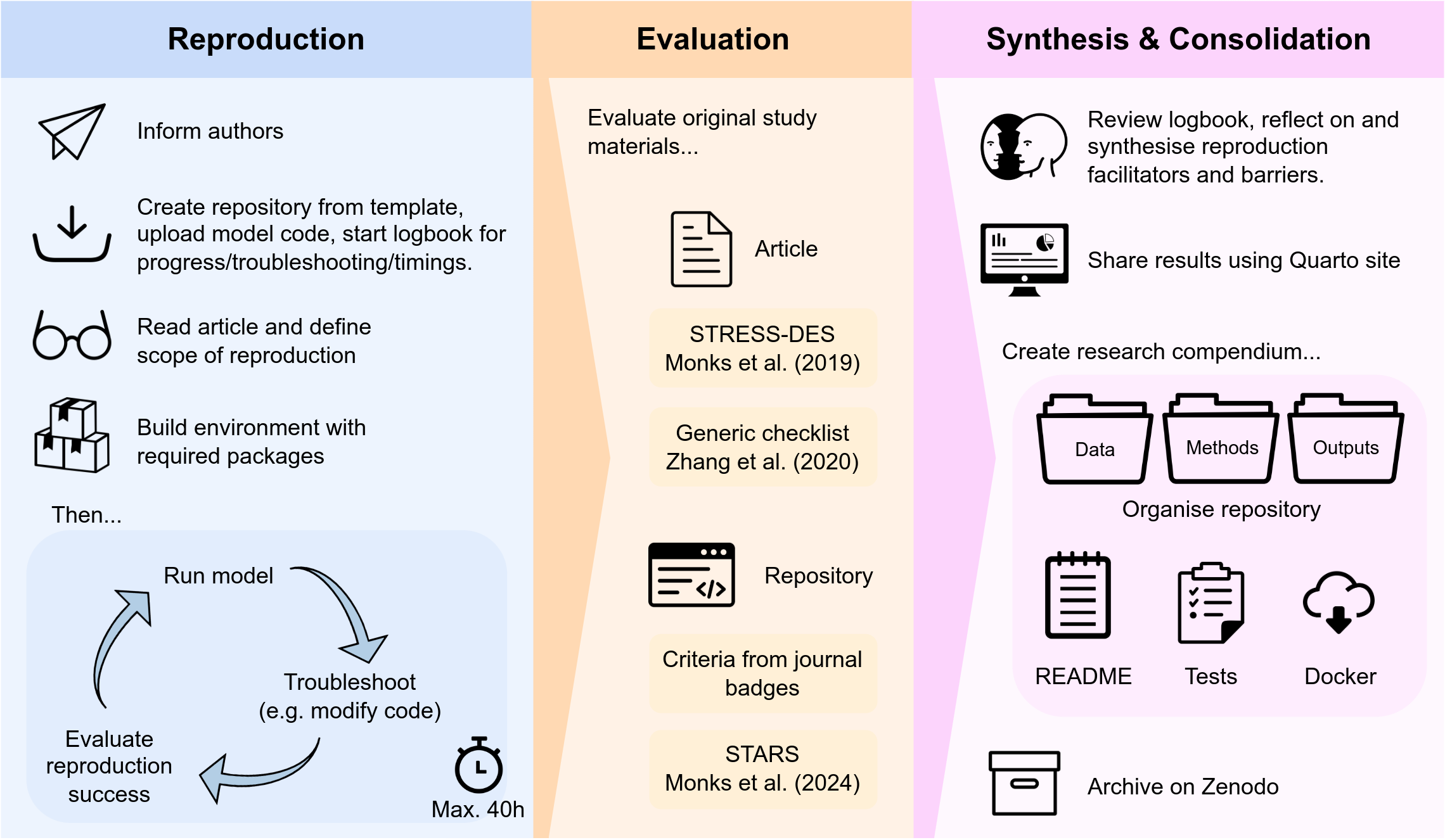
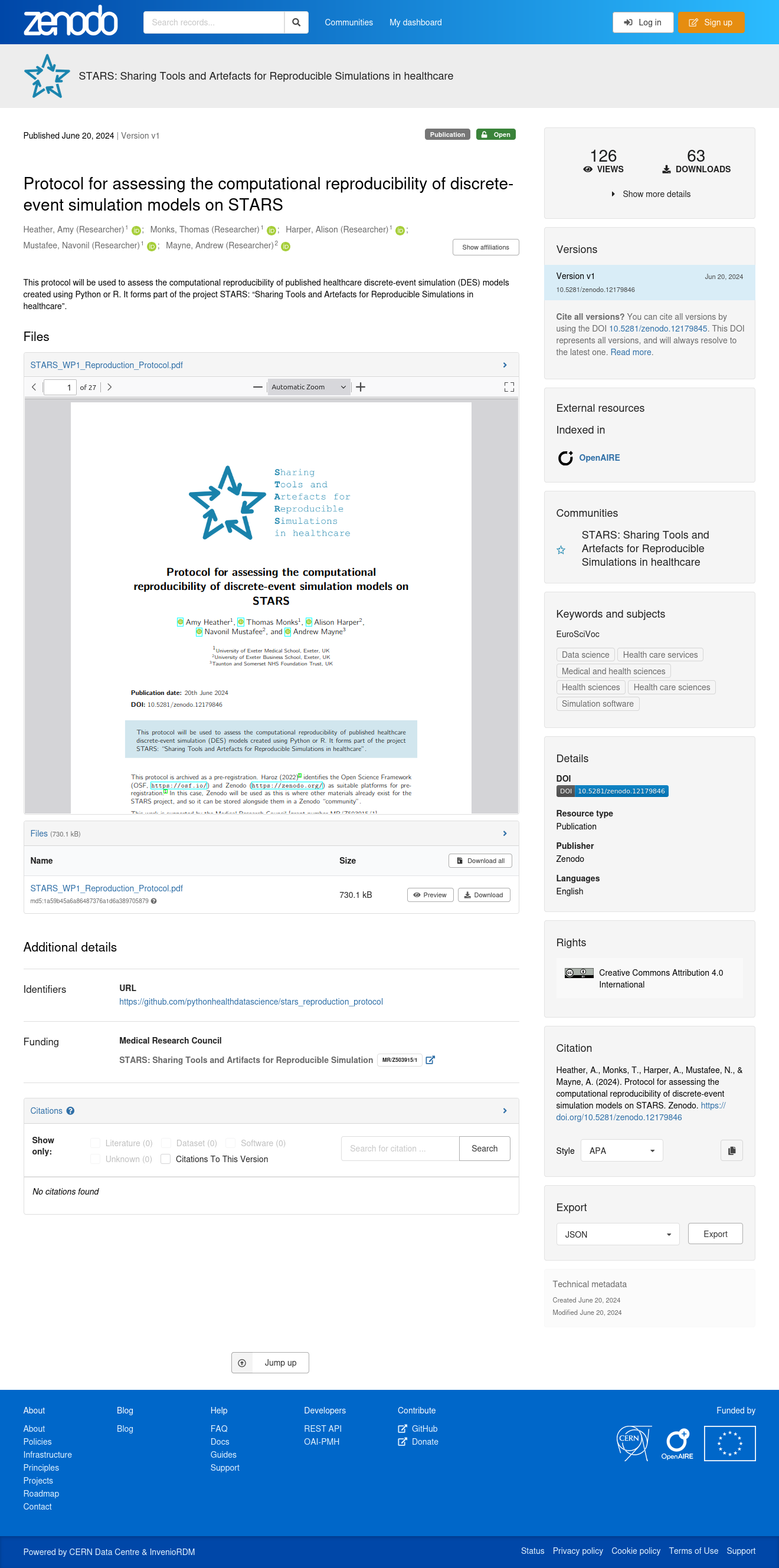
Pre-registration
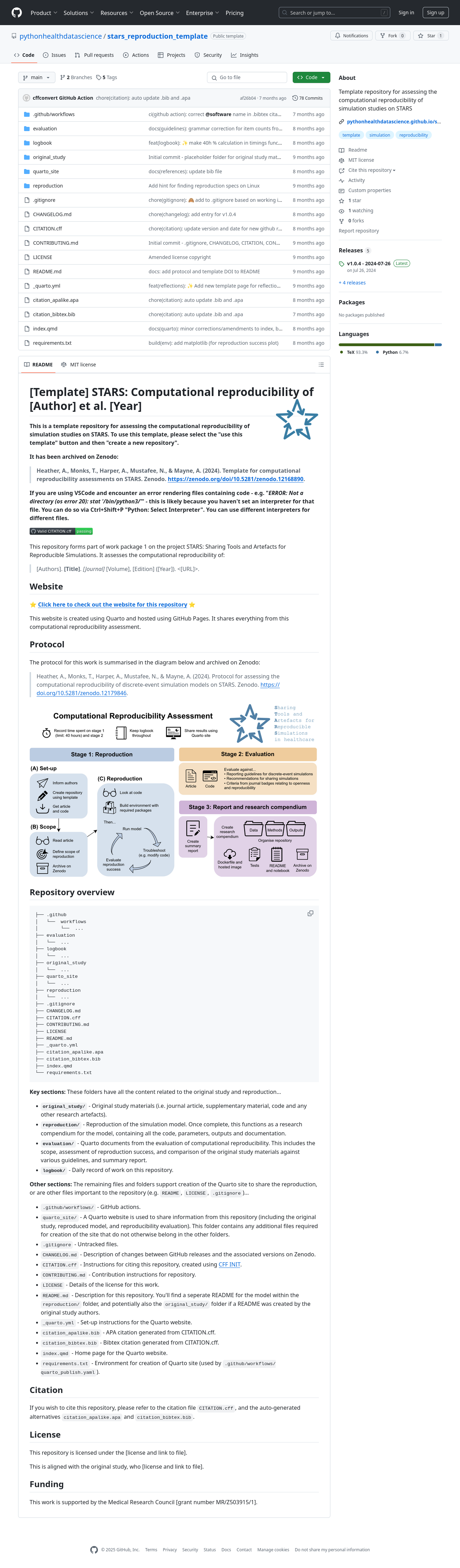
GitHub template
Recommendations
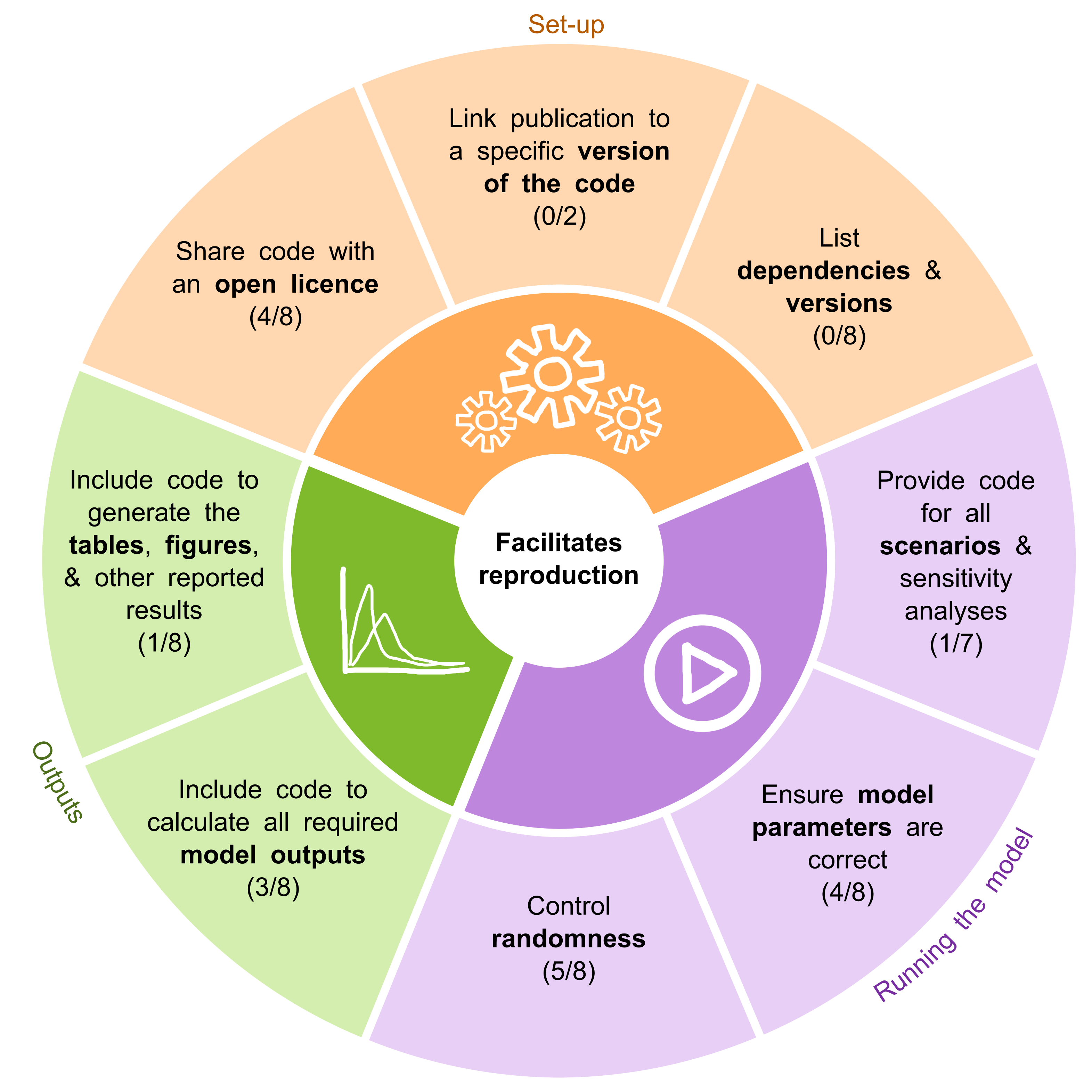
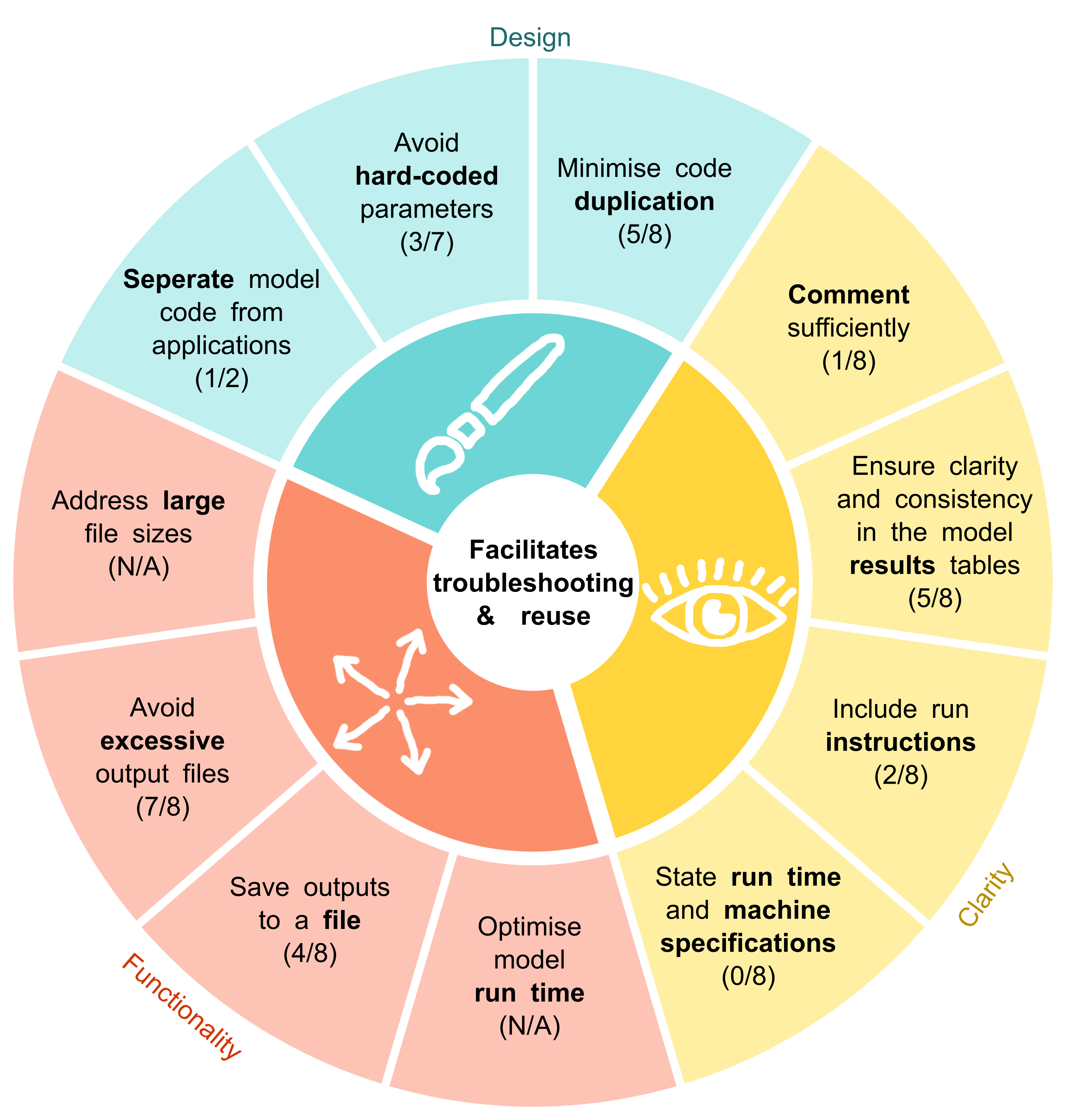
Preprint
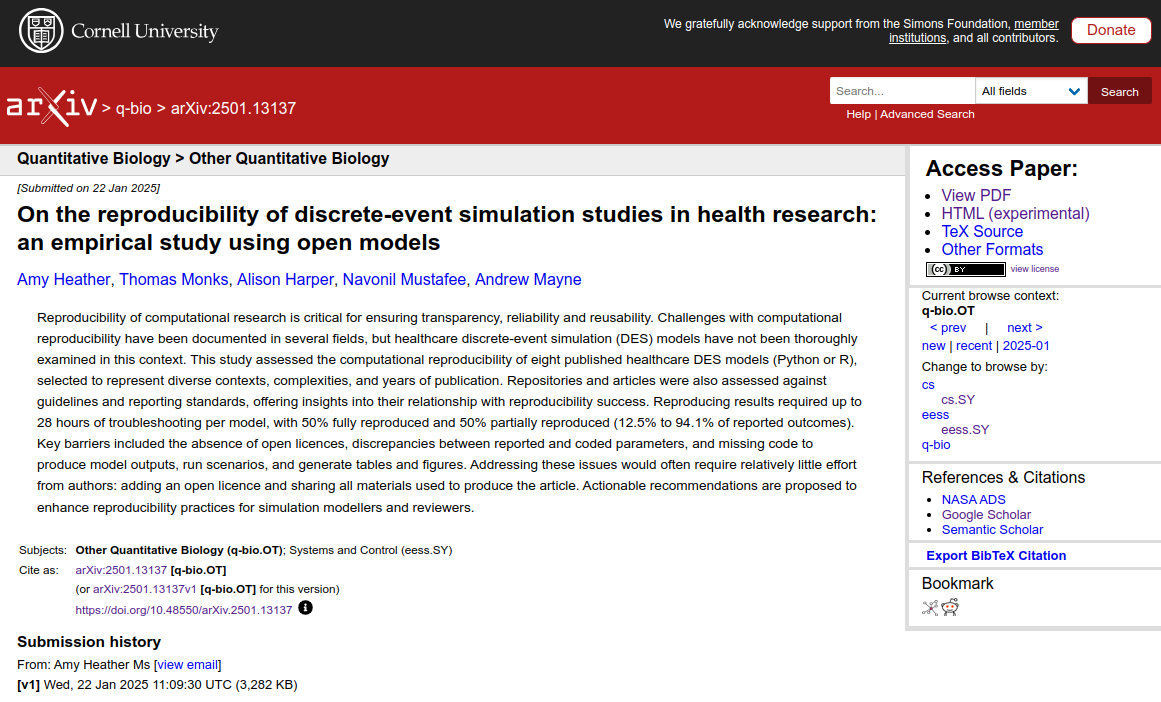
Ongoing / future work

Acknowledgements
Thanks for their supervision, support, and involvement to:
- Tom Monks 0000-0003-2631-4481
- Alison Harper 0000-0001-5274-5037
- Nav Mustafee 0000-0002-2204-8924
- Andy Mayne 0000-0003-1263-2286
Thanks to the authors who made their code available under open licences, facilitating this research.
This project is supported by the Medical Research Council [grant number MR/Z503915/1].